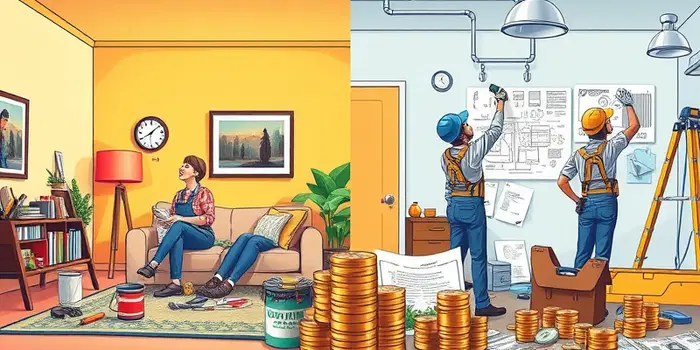
Deciding whether to tackle a project yourself or hire a professional can feel like a balancing act between time, money, and expertise. With some tasks, rolling up your sleeves translates into substantial savings on labor costs, while others quietly accumulate hidden expenses.
This guide walks you through the data, real-world examples, and a practical framework so you can make empowered decisions and keep more cash in your pocket.
On paper, DIY projects promise tempting discounts. According to the U.S. Census Bureau’s American Housing Survey, the average professionally done project costs $6,352, compared to just $2,502 for a DIY equivalent. That gap can represent savings of up to 83%, and in many cases homeowners report trimming three-quarters of their expenses by skipping contractors.
However, the sticker price rarely tells the full story. You must factor in tool purchases, wasted materials, the value of your time, and the cost of potential mistakes. When you buy tools you’ll never use again, or when minor miscalculations lead to expensive redos, DIY can lose its luster fast.
Instead of a blanket rule, treat DIY as a decision problem. Ask: How often will I use the tools? Are the materials cheaper than store-bought alternatives? Can I absorb the risk if something goes wrong?
Certain categories consistently deliver impressive returns when you do the work yourself. They share common traits: low risk, repeatable steps, inexpensive supplies, and quick learning curves.
These tasks lean heavily on tools that are already owned or very basic and deliver savings that accumulate each time you repeat them.
Some projects carry complexities or risks that quickly erode DIY benefits. If mistakes can be dangerous, costly to fix, or put you in violation of codes, professional help is often the wisest path.
In these scenarios, the cost of hiring experts can be offset by avoiding mistakes that are expensive or dangerous and ensuring code compliance from day one.
Beyond the obvious line items, DIY carries subtler costs that can tip the scales. Time is the greatest hidden expense: hours spent learning and working could have earned you money or given you free time. Material waste, tool maintenance, and opportunity costs quietly chip away at your savings.
To decide confidently, run projects through a simple checklist:
Comparing these factors lets you transform excitement into financial clarity, ensuring you only DIY when the numbers add up.
By viewing DIY as a decision framework rather than an automatic savings hack, you can target projects that truly reward your effort. Tackling small, repeatable, low-risk tasks often yields the greatest returns, while complex, one-off jobs may warrant professional expertise.
Armed with data, real-world examples, and a clear checklist, you’ll know exactly when to pick up your tools and when to pick up the phone. That way, you save money, avoid regrets, and transform your home improvement ambitions into smart financial victories.
References